I build systems that sense, decide, and adapt — from predictive-maintenance hardware and adaptive traffic control to applied economics and computational fluid dynamics research.

I'm a high school engineer who likes taking a vague, real-world problem — a failing HVAC unit, a jammed condiment bottle, a wobbly pickleball — and turning it into a working prototype, a dataset, or a defensible design. My work spans embedded sensing and mechanical design, applied economics, and CFD simulation, tied together by the same process: define the problem precisely, test the smallest version that can fail, and iterate.
My MachineHP predictive-maintenance system won a Texas DECA state championship and is protected by a provisional patent. My independent economics research on housing, inflation, and equity market co-movement has been published in the Journal of Emerging Investigators. Outside of solo projects, I've competed as a finalist in the Texas A&M Ideas Challenge with JARC.
Every project connects hardware, software, and the physical failure mode it's meant to catch — not just a single clever part.
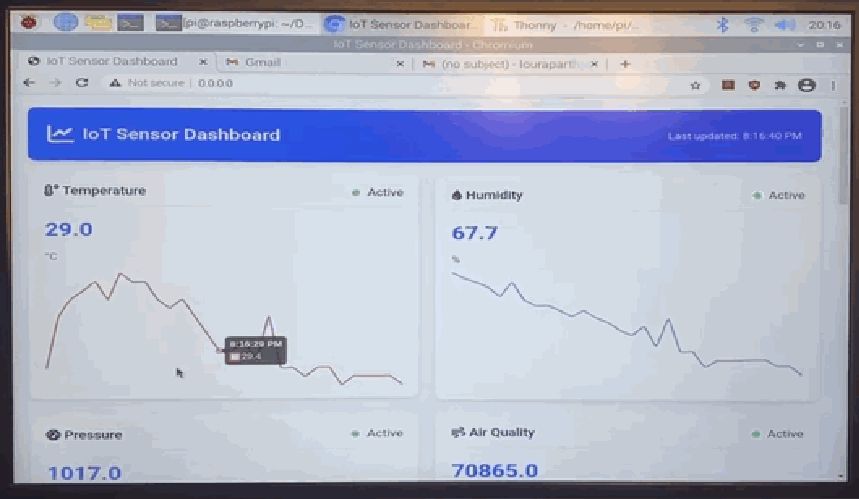
Working prototypes with real sensors and coded dashboards, from a 3D-printed collar to a Raspberry Pi HVAC monitor.
Lag-correlation analysis across four decades of housing, inflation, and market indicators for published research.
State- and national-level competition experience pitching feasibility, not just the idea, to judges and engineers.
Eight projects spanning predictive maintenance, adaptive infrastructure, consumer hardware, applied economics, fluid dynamics, and hands-on hardware builds — each built around a specific, real problem.


Predictive Maintenance for HVAC Systems — DECA Innovation Plan
Most HVAC systems are maintained reactively, repaired only after performance degrades, despite continuous signals like vibration, temperature, and power draw being available the whole time. There's no practical, low-cost way to catch early mechanical degradation in real-world operating conditions.
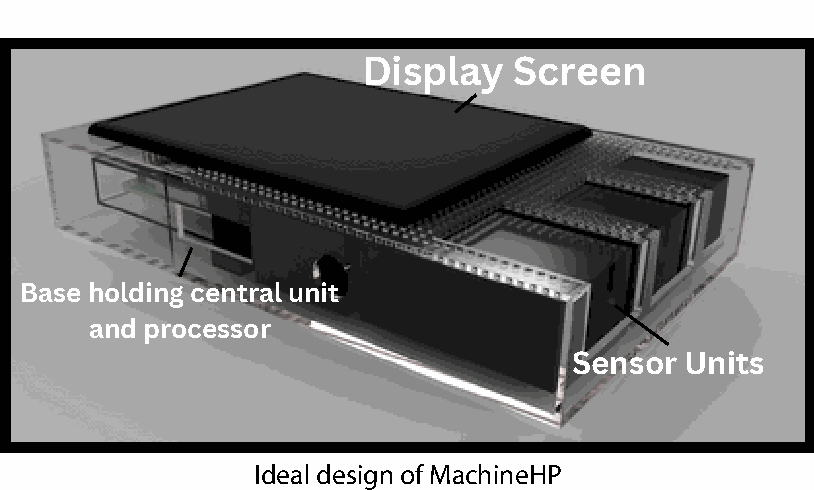
MachineHP collects signals from multiple sensors, extracts features that correlate with wear, and flags deviations from normal baselines — separating meaningful change from noise and surfacing actionable alerts instead of raw charts.
Vibration, temperature, acoustic noise, and electrical load are already physically linked to common failure modes like bearing wear, imbalance, and airflow restriction — making the underlying detection problem tractable with off-the-shelf sensors.


Sensing & Feedback for Safer Weightlifting
Barbell collars get mistreated or loosen during drops and movement in the gym. Uneven load can cause injury or equipment damage, and most gyms rely entirely on user attention to catch it.
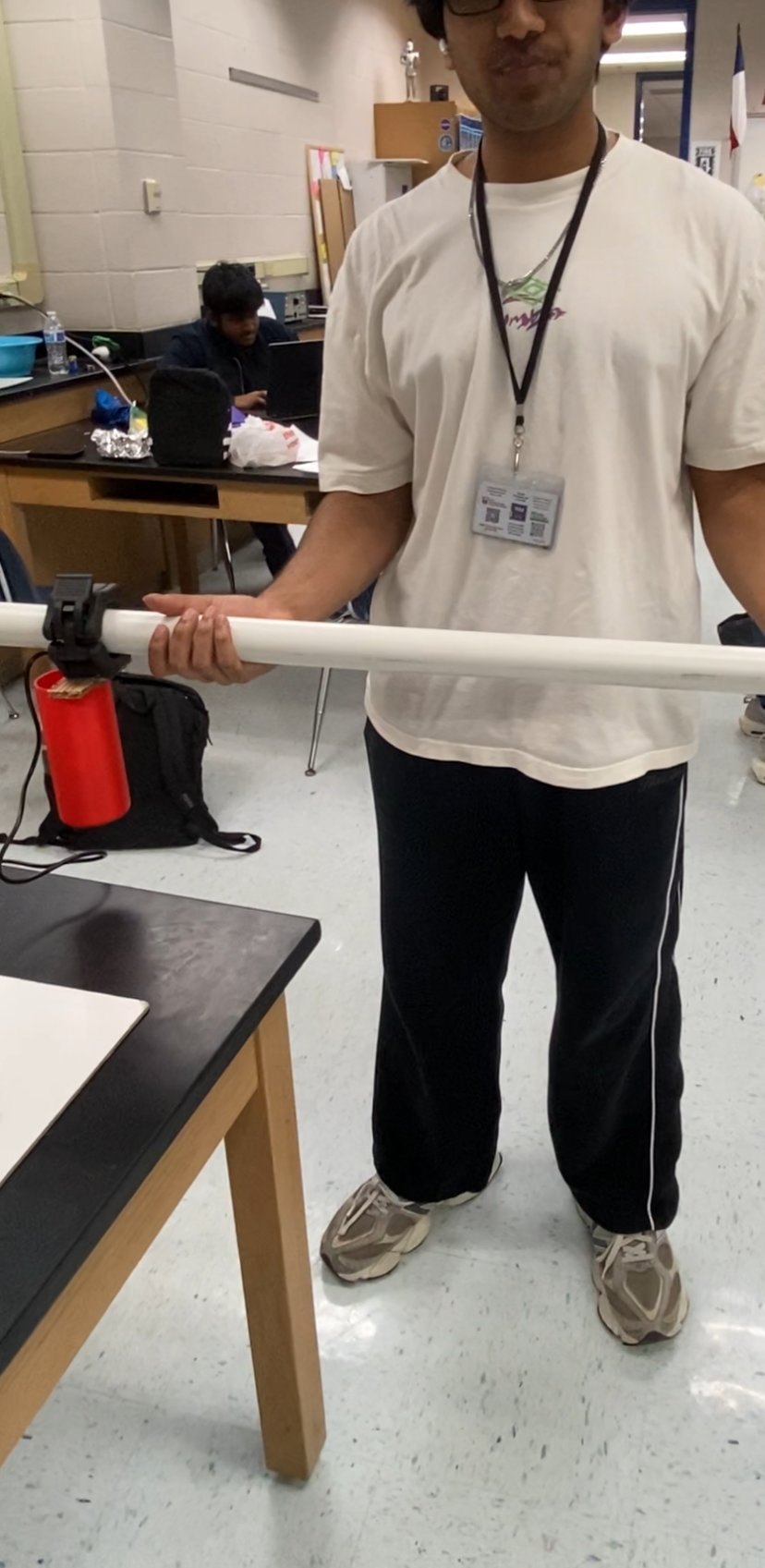
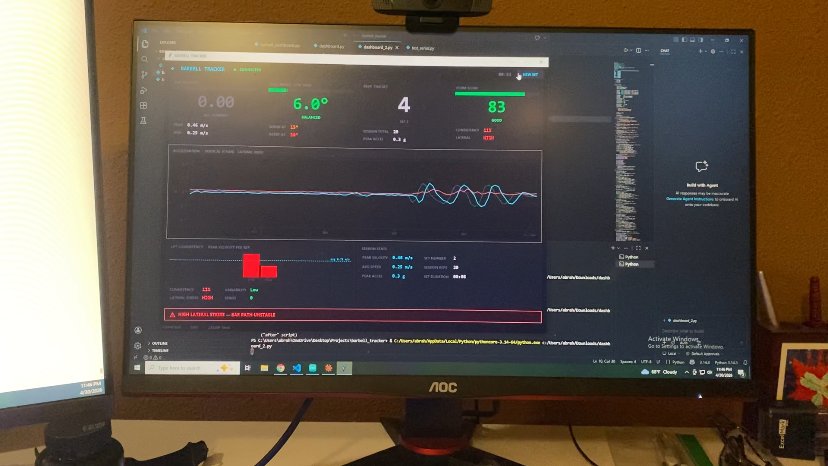
A 3D-printed clamp mounts an accelerometer directly to the bar, streaming tilt and lateral-speed data to a live "Barbell Tracker" dashboard I coded — tracking balance angle, rep count, and bar-path stability in real time, with an on-screen warning when lateral speed spikes into an unstable path.
Built and bar-tested: the sensor rig reliably reports tilt and rep count, and the dashboard flags unstable lateral movement during a live lift. Next steps are tightening the balance-angle calibration and moving the electronics from a bench rig into a collar-sized enclosure.
Hands-On Mechanical Assembly & Electronics Deep Dive
Most of my other projects live at the design and prototyping level — I wanted a project that forced me into the fine mechanical and electrical details: torque on tiny screws, motor/ESC wiring, and power delivery under load. Building a drone from raw parts over the summer was a way to go deeper into electronics than any of my sensor-based projects had required.
Assembled a micro racing quadcopter from a carbon-fiber frame, four brushless motors, and a combined flight-controller/ESC stack, hand-soldering motor and battery leads and routing power through a 3D-printed mount that protects the stack from crash impacts. I intentionally left off the FPV camera and video transmitter — it isn't needed to validate the mechanical and electrical build, and skipping it kept the parts cost down.
Real mechanical assembly rewards patience differently than CAD does — balancing weight across the frame, managing wire routing so nothing shorts against carbon fiber, and reading component specs (voltage, C-rating, current draw) closely enough to not fry anything. Those habits carried straight into how I now wire and mount sensors on projects like the Smart Barbell Collar.
Bottom-Dispensing Container to Cut Condiment Waste
A significant amount of food waste comes from household condiments, because traditional jars make it difficult to fully dispense their contents — usable product gets discarded not from spoilage, but from container design limitations.
JARC mechanically elevates its contents as they're used, similar to a glue stick, ensuring near-complete extraction without squeezing, scraping, or added force — redesigning the container rather than the food itself.
Buildable with low-cost, food-safe plastics and a simple mechanical lift mechanism manufacturable via injection molding. No electronics and no changes to the condiment itself means minimal disruption to existing filling processes.
Airflow & Drag Through a Perforated Sphere
Pickleballs behave inconsistently during shots because air passes through their holes and interacts with boundary layers and wake structures in ways that aren't intuitive from geometry alone.
I built a CFD workflow to simulate airflow around and through a perforated sphere — setting up geometry, choosing a turbulence model, refining mesh near the holes, and interpreting drag forces. The key lesson: results are highly sensitive to mesh and boundary assumptions.
More, smaller holes distribute airflow more evenly and stabilize the wake, reducing lateral force fluctuations even in turbulent conditions — and passive geometry alone, with no spin or active control, can make flight meaningfully more predictable.
Traffic Flow Modeling & Optimization
I built ClearPath on my own as a way to push my coding and prototyping skills further — taking on a problem meaty enough to require real simulation logic and an optimization algorithm, not just a static prototype.
Traffic signal timing is largely static or schedule-based even though demand varies continuously with time of day, weather, and incidents — causing unnecessary congestion, longer travel times, and elevated crash risk at intersections.
I modeled traffic flow through an intersection in software, then layered in an algorithm that adjusts signal timing in response to that modeled flow — smoothing throughput instead of leaving signals on a fixed schedule. The dashboard visualizes the simulated congestion, flow, and queue behavior as the algorithm reacts to it.
Building both the simulation and the optimization logic myself forced me to think about traffic as a dynamic system rather than a fixed-timing table — and gave me real practice turning a model into something that reacts and adapts in near real time.

A Sensor Cap for Real Food-Freshness Signals
Printed expiration dates are conservative by design and don't reflect actual storage conditions, leading to avoidable food waste and unclear decisions for families about what's still good.
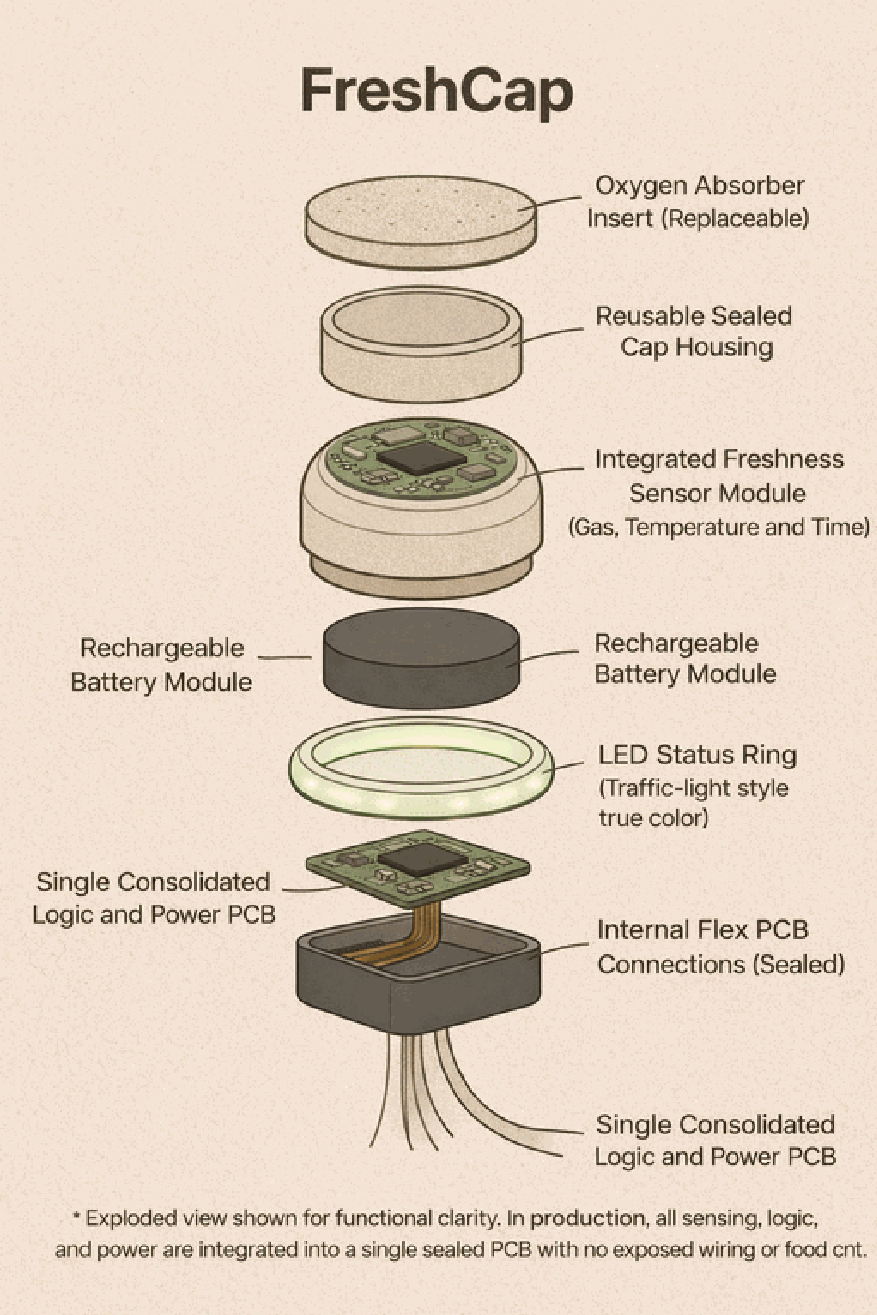
FreshCap uses a sensor stack to measure conditions that correlate with spoilage, mapping readings to a simple freshness score. The UX stays intentionally minimal — LEDs show a small set of states — while the device logs raw readings for deeper analysis.
Feasible if the gas-sensing choice is cost-effective and stable over time. The core challenge is calibration drift and food-type variability, so a realistic MVP starts with humidity and temperature plus conservative thresholds before adding gas sensing.
Lag Analysis of Housing, Inflation & Equity Markets
Housing prices, inflation, and equity markets are often analyzed in isolation, limiting the ability of policymakers and investors to design solutions grounded in how these indicators actually move together over time.
I assembled and cleaned time-series data for the S&P 500, Housing Price Index, Consumer Price Index, and gold prices, then ran correlation analysis with lag offsets to see how changes in one series tended to precede or follow another.
The correlations show when a single indicator predicts a coming shift in HPI trend — giving policymakers and individuals a data-grounded basis for market-stabilizing decisions.
Open to internships, research collaborations, and conversations about engineering, data, or anything in between.